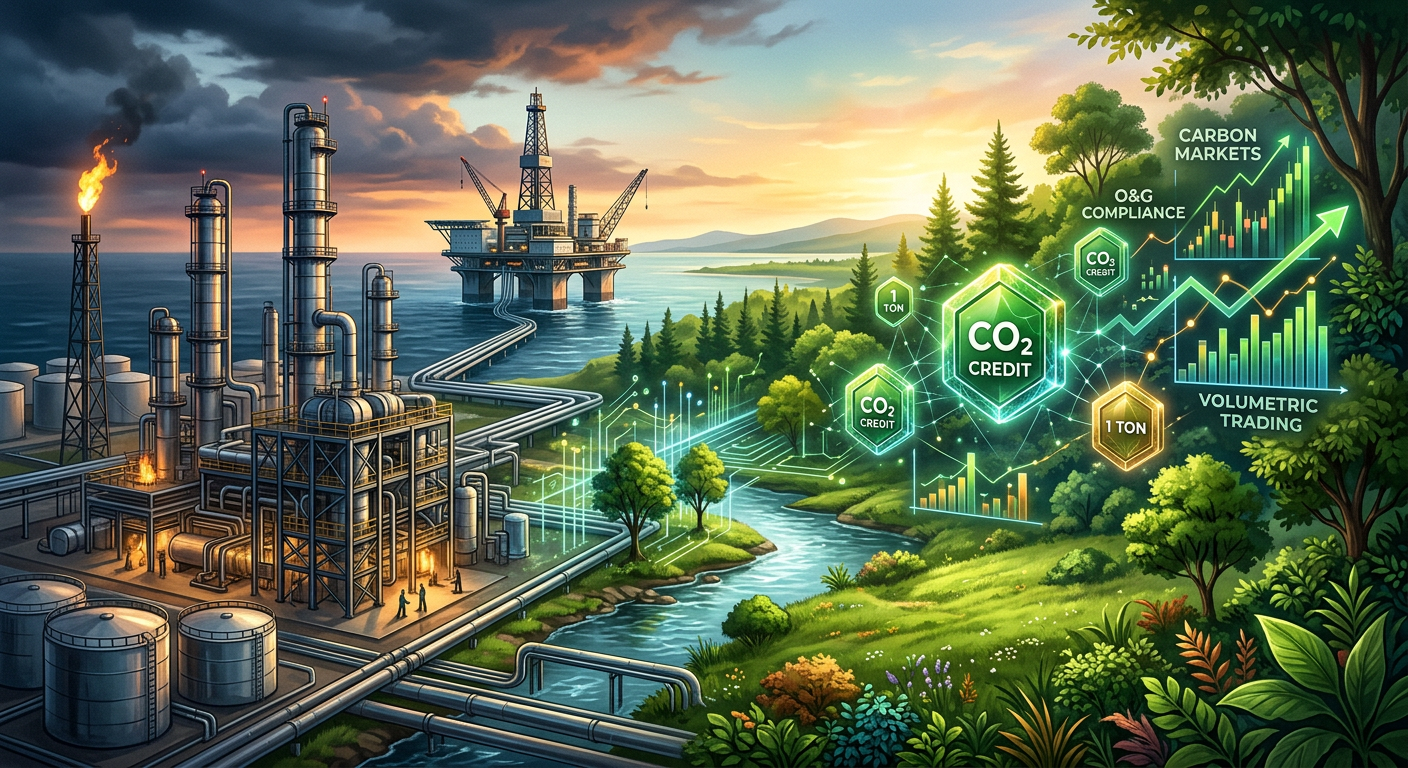
Demystifying Carbon Credits: What They Are, How They Trade, and Why They Matter
As the world races toward net-zero emissions, “carbon credits” have become a buzzword in boardrooms and environmental summits alike. But what exactly are they, how do they function in the real world, and what benefits do they offer? Let’s break down the mechanics of the carbon market.
What Are Carbon Credits?
At its core, a carbon credit is a tradable certificate or permit representing the right to emit one metric ton of carbon dioxide equivalent (CO2e) [1]. Conversely, in the voluntary market, a carbon credit represents the verified reduction, avoidance, or removal of one metric ton of CO2e from the atmosphere [2].
These credits are generated by specific, verified climate action projects. Examples include:
- Nature-based solutions: Reforestation, wetland restoration, and improved forest management.
- Technology-based solutions: Renewable energy installations, methane capture from landfills, and direct air capture (DAC) technologies.
Once a project is independently audited and verified by rigorous international standards (such as Verra’s Verified Carbon Standard or the Gold Standard), credits are issued and recorded in a registry [1].
How Are Carbon Credits Traded?
The carbon market is generally split into two categories:
- Compliance Markets: These are regulated by governments (like the EU Emissions Trading System or California’s Cap-and-Trade). Companies are given a cap on their emissions; if they exceed it, they must buy credits. If they emit less, they can sell their surplus.
- Voluntary Carbon Markets (VCM): Here, corporations, governments, and individuals voluntarily purchase credits to offset their unavoidable emissions and meet self-imposed climate targets.
Trading happens on specialized platforms and exchanges. In recent years, exchanges like the Intercontinental Exchange (ICE) and newer platforms like ESGCX have revolutionized the market by introducing digital Measurement, Reporting, and Verification (MRV) tools and blockchain-friendly systems [3]. These platforms improve price discovery, ensure liquidity, and provide transparency so buyers know exactly what they are purchasing.
In 2025, the market saw a massive “flight to quality.” Buyers began demanding high-integrity credits, causing a two-tier market to emerge. High-quality, durable carbon removal credits commanded premium prices (sometimes over $160 per credit in forward contracts), while lower-rated avoidance credits traded for much less [4].
The Benefits of Carbon Credits
When executed correctly, carbon credits offer profound benefits:
- Accelerating Decarbonization: They put a direct financial price on carbon, incentivizing companies to reduce their own emissions as much as possible before turning to offsets.
- Funding Climate Innovation: The sale of credits provides crucial early-stage financing for expensive, cutting-edge technologies like Direct Air Capture (DAC) and biochar [5].
- Delivering Co-Benefits: High-quality projects do more than just capture carbon. They often empower local communities, protect endangered biodiversity, improve soil health, and create sustainable jobs [1].
Conclusion
Carbon credits are not a “get out of jail free” card for polluters. They are a vital financial mechanism designed to accelerate global decarbonization. As the market matures through 2026, with stricter regulations and a relentless focus on quality and transparency, carbon credits will remain a cornerstone of the global strategy to combat climate change.
Sources
[1] Carbon credits explained: a guide to climate action (southpole.com)
[2] Carbon Credits Explained | Climate Impact Partners (climateimpact.com)
[3] The Top Carbon Credit Exchanges Driving Climate Markets in 2026 and Beyond… (carboncredits.com)
[4] The Carbon Credit Market in 2025 is A Turning Point: What Comes Next for 2… (carboncredits.com)
[5] Key trends in the 2026 voluntary carbon market | Carbon Direct (carbon-direct.com)